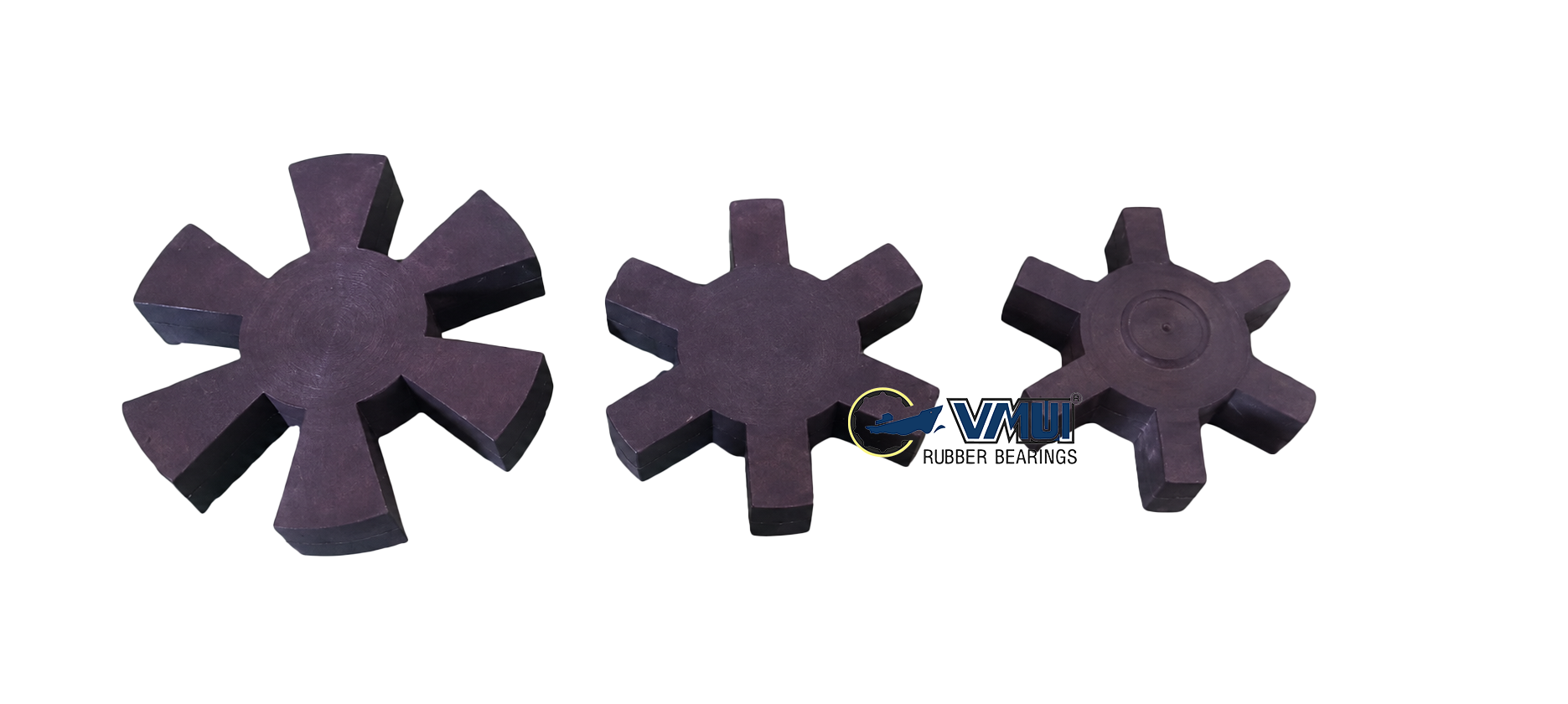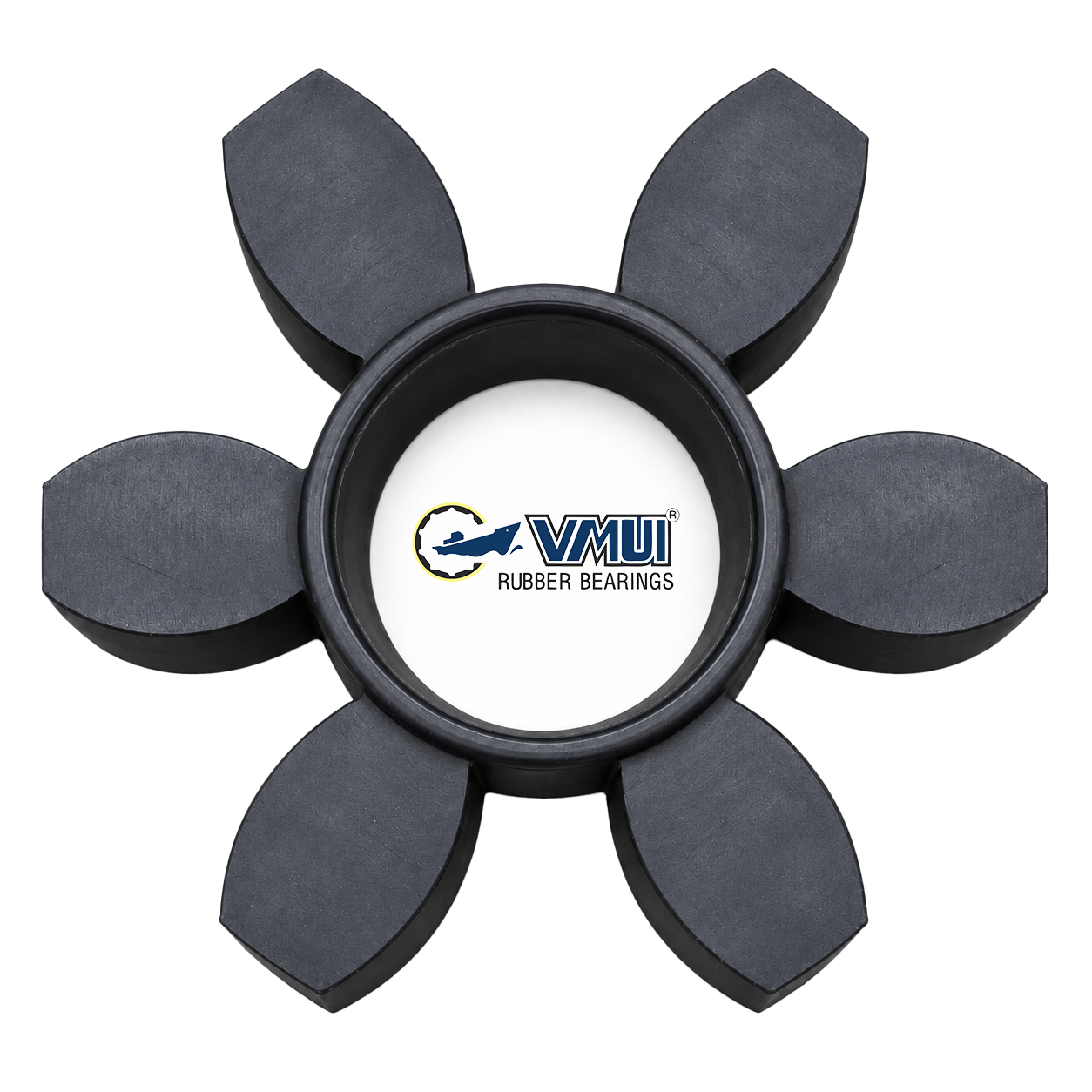
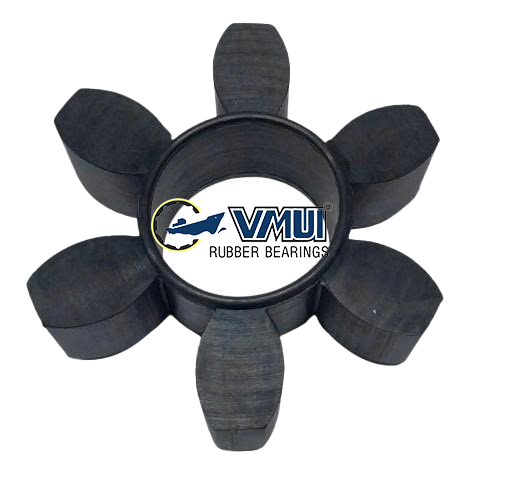
A rubber coupling spider, also known as a rubber flexible coupling insert, is a technical rubber component installed between the two hubs of a mechanical coupling. It transmits torque from the motor to the driven equipment while absorbing vibration and reducing shock loads during operation.
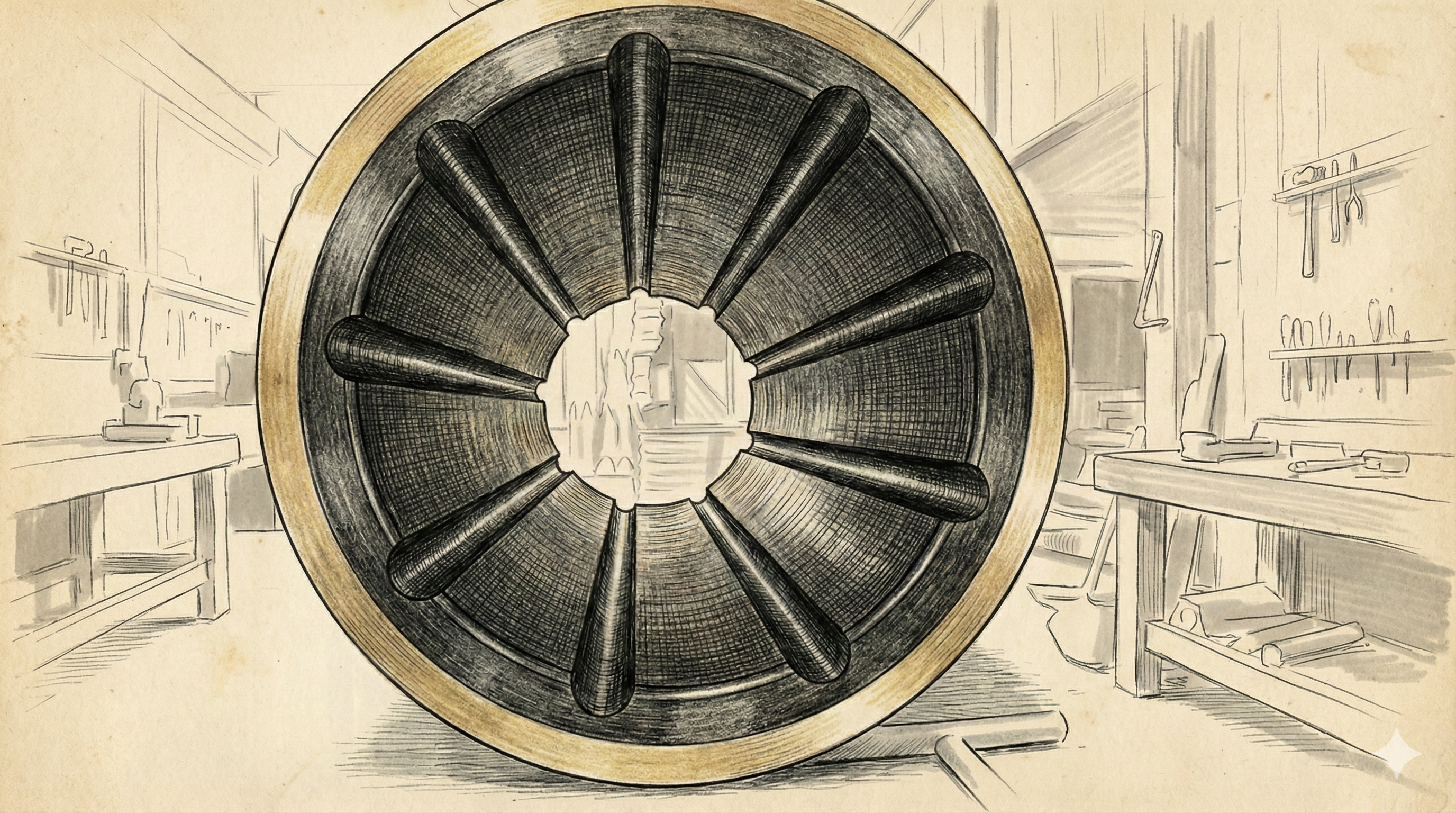
Rubber coupling spiders can be manufactured in various shapes, dimensions, and numbers of lobes. The six-lobe rubber coupling spider features an integrated central ring surrounded by six evenly spaced rubber lobes.
The product is molded as a single piece from technical rubber and consists of:
During assembly, the rubber lobes are positioned between the metal jaws of the two coupling hubs. Torque from the motor is transmitted through the rubber insert to the shaft of the driven equipment.
Thanks to the elasticity of rubber, the coupling spider performs several important functions:
Rubber coupling spiders are used in various machines that require torque transmission between a motor and a driven shaft. Their elasticity, vibration-damping ability, and shock-absorbing properties make them suitable for systems that start frequently or operate continuously.
One typical application of the six-lobe rubber coupling spider is in Roots blower drive systems. The coupling is installed between the motor shaft and the blower shaft to transmit motion, absorb vibration, and reduce shock loads acting on the machine assembly.
Roots blowers are commonly used for:
During continuous operation, a properly selected coupling spider helps the motor and Roots blower run smoothly while reducing vibration transmitted to the shafts and bearings.
The rubber coupling spider is installed between the motor and the pump or compressor shaft. It transmits power and reduces shock during start-up, shutdown, and load changes. The product can be used in water pumps, industrial pumps, and compatible compressor assemblies.
In exhaust, supply-air, and ventilation fan systems, the rubber coupling spider transmits rotation from the motor to the fan shaft. Its elasticity helps reduce vibration and noise while limiting excessive forces on the bearings.
The coupling spider can be installed between the motor and gearbox or drive shaft of a conveyor. It helps reduce shock loads when the conveyor starts, stops, or experiences changes in the quantity of material being transported.
Rubber coupling spiders are used in chemical mixers, sludge agitators, and water treatment equipment. They transmit torque, damp vibration, and help protect the drive system when operating loads fluctuate.
Rubber coupling spiders are also used in processing machines, packaging equipment, material-handling systems, machine tools, and other industrial drive assemblies. The shape, dimensions, material, and hardness must be selected according to the operating speed, transmitted torque, and working environment.
Rubber can deform elastically, allowing the coupling spider to absorb a portion of the vibration and impact generated during operation. This helps the machine run more smoothly and reduces stress on connected components.
The six rubber lobes engage with the jaws of the two coupling hubs. Their even distribution around the center helps maintain balanced torque transmission and stable rotational movement.
The flexible rubber insert can accommodate minor shaft misalignment within the coupling’s design limits. However, the shafts must still be properly aligned during installation to prevent excessive vibration and premature wear.
The one-piece construction makes the rubber coupling spider convenient to install, inspect, and replace during equipment maintenance.
Depending on the working environment and operating requirements, rubber coupling spiders can be manufactured from different technical rubber materials:
Material and hardness are selected according to transmitted torque, rotational speed, temperature, vibration level, and exposure to oil, water, or chemicals. Selecting the correct material helps the coupling spider retain its elasticity, transmit torque reliably, and achieve a longer service life.
In addition to the six-lobe rubber coupling spider, products can be manufactured according to physical samples, technical drawings, or specified operating requirements, including:
Rubber coupling spiders can be produced in a wide range of sizes and configurations to suit different motors, Roots blowers, pumps, fans, and industrial drive systems.