A propeller shaft bearing is an important component in a vessel’s shafting system. It supports the shaft, reduces friction, limits vibration, and helps the propeller shaft operate stably in a water-lubricated environment. Choosing the right propeller shaft bearing size not only ensures proper installation, but also directly affects bearing service life, shafting stability, and vessel operating efficiency.
In practice, many cases of premature bearing wear, overly tight installation, loose fitting, or vibration after replacement are caused by selecting a bearing size that does not match the actual shaft and installation condition. Therefore, when ordering a new propeller shaft bearing, it is important not to rely on only one dimension, but to check all relevant technical factors.
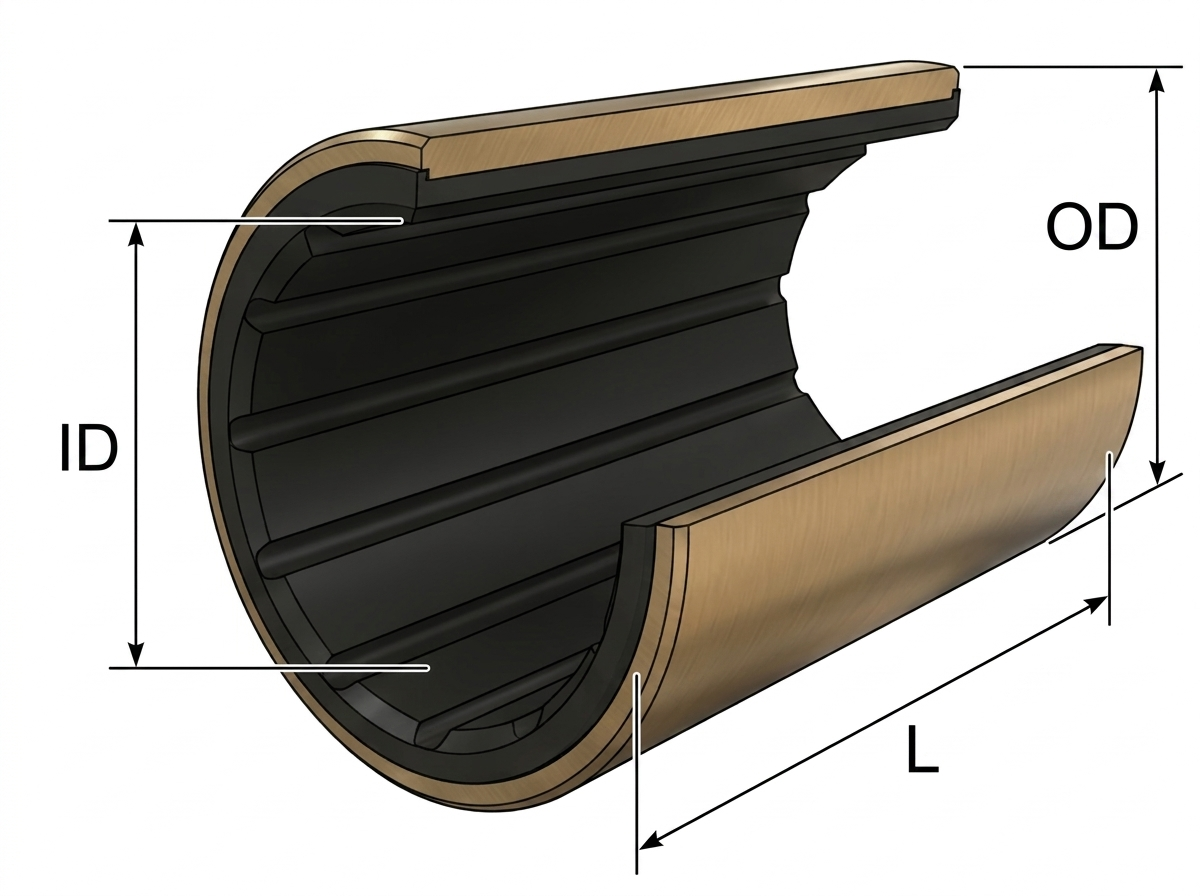
The shaft diameter is the first and most important parameter when selecting a propeller shaft bearing. The inner diameter of the bearing must match the outer diameter of the propeller shaft to ensure stable support during operation.
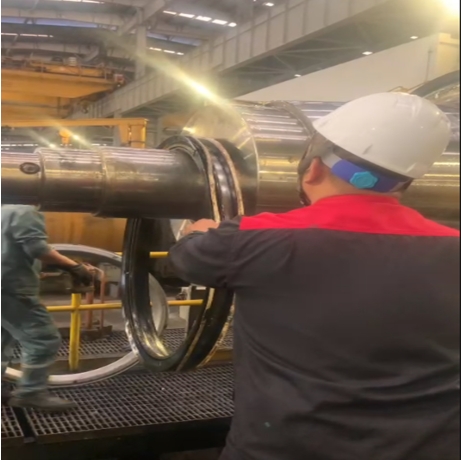
However, for vessels that have been operating for many years, the actual shaft size may no longer be exactly the same as the original drawing. The shaft may be worn, scratched, pitted, or previously machined during repair. Therefore, before ordering a new bearing, the shaft diameter should be measured directly at several positions, especially at the working area inside the bearing.
If only the old drawing size is used without checking the actual shaft condition, the new bearing may not achieve the correct working clearance.
The outer diameter of the bearing must match the installation position in the stern tube, bracket, or bearing housing. This is an important dimension because it determines whether the bearing can be firmly fixed in place.
If the outer diameter is too small, the bearing may become loose, rotate, or shift during vessel operation. On the other hand, if the outer diameter is too large, the press-fitting process may deform the bearing, affecting the inner bore and the clearance between the shaft and the bearing.
For rubber bearings with brass, composite, or metal shells, the actual housing bore should be carefully checked before manufacturing to ensure proper fitting, secure installation, and no deformation.
Bearing length affects shaft support and load distribution. If the bearing is too short, the load may concentrate on a small contact area, causing the rubber to wear faster. If the bearing is too long but the water groove design is not suitable, water flow, sand discharge, and cooling efficiency may be reduced.
In general, bearing length should be determined based on the shafting design, shaft diameter, working load, and actual installation space. For replacement bearings, the installation length and the condition of the old bearing should also be checked to support proper size selection.
A propeller shaft bearing should not fit too tightly around the shaft. During operation, a suitable clearance is required so that water can enter the contact area for lubrication, cooling, and flushing away impurities.
If the clearance is too small, the shaft may overheat, seize, or cause rapid rubber wear. If the clearance is too large, the shaft may become loose, vibrate, knock, and reduce the stability of the shafting system.
The correct working clearance should be determined based on the shaft diameter, bearing type, bearing material, operating conditions, and technical requirements of each vessel. This is why bearing selection should not be based only on estimation or by copying an old bearing that has already been heavily worn.
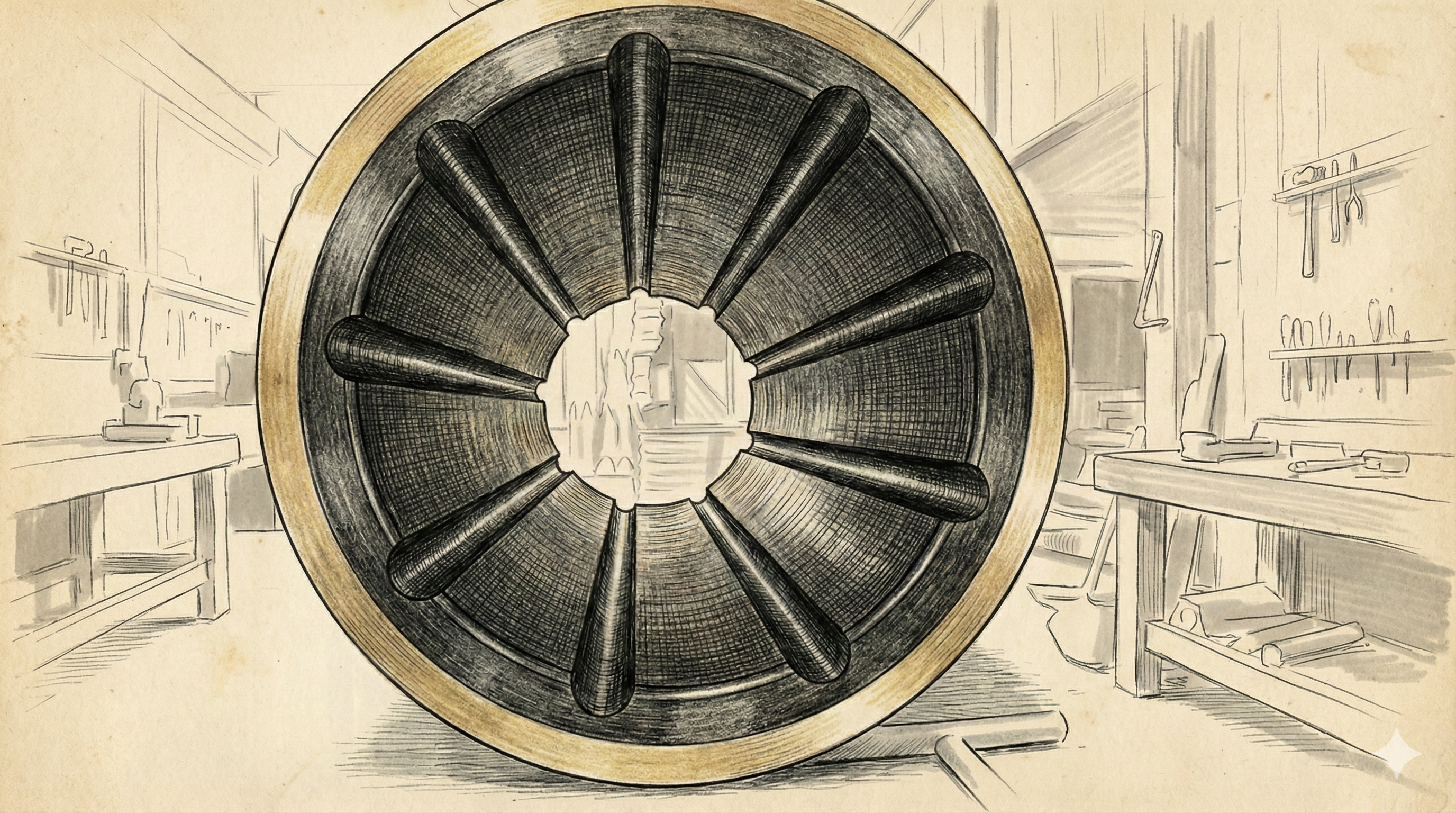
Water grooves in a propeller shaft bearing help guide water into the contact area between the shaft and the bearing. Water provides lubrication, cooling, and helps remove mud, sand, and other impurities from the working area.
When selecting the bearing size, the number of water grooves, groove width, groove depth, and groove direction should also be considered. If the grooves are too small or not properly arranged, the bearing may lack sufficient water lubrication, causing overheating and premature wear. If the grooves are too large, the rubber contact area supporting the shaft is reduced, which may lower the load-carrying capacity.
Therefore, the water groove design should be suitable for the shaft diameter, bearing size, and actual vessel operating conditions.
For vessels that have been in service for a long time, the original drawing and the actual dimensions may differ. The shaft may be worn, the bearing housing may be deformed, or the shafting system may no longer be aligned as originally designed.
Before ordering a new bearing, the following information should be checked:
Actual measurement helps prevent problems such as incorrect fitting, overly tight installation, loose installation, or unsuitable working clearance during operation.
If the shafting system still follows the original design and the drawing is complete, the bearing can be manufactured according to the technical drawing. However, for vessels that have been operating for many years, it is better to combine both the drawing and actual measurements.
If the old bearing still retains its general shape, it can be used as a reference sample. However, it should not be copied completely if it is already worn, deformed, debonded, or was previously installed incorrectly.
The best approach is to provide the following information:
This information allows the manufacturer to recommend a more suitable size, structure, and material.
Choosing the right propeller shaft bearing size requires considering many factors, including shaft diameter, bearing outer diameter, bearing length, working clearance, water groove design, and the actual condition of the shafting system.
A suitable propeller shaft bearing is not only one that “fits” during installation, but also one that can properly support the shaft, guide water for lubrication, reduce vibration, and operate stably in a water-lubricated environment.
Anh Tri Tue Manufacturing & Trading Co., Ltd. provides consultation, manufacturing, and custom production of rubber propeller shaft bearings based on samples, drawings, or actual dimensions, suitable for vessels, boats, barges, and shafting systems operating in water.