INTRODUCTION
Propeller shaft bearings (Propeller Shaft Bearing / Stern Tube Bearing) come in various structural designs and materials to suit different vessel types, speeds, loads, and operating conditions. Understanding the characteristics of each bearing type helps shipowners, technicians, and repair yards choose the correct solution, resulting in higher durability and reduced operating costs.
In the marine industry today, propeller shaft bearings are generally grouped into three categories:
- Rubber bearings with metal shell
- Rubber bearings with non-metallic shell (composite / phenolic)
- Rubber bearings without shell
These groups also represent the product categories currently manufactured by Anh Trí Tuệ based on market demand.
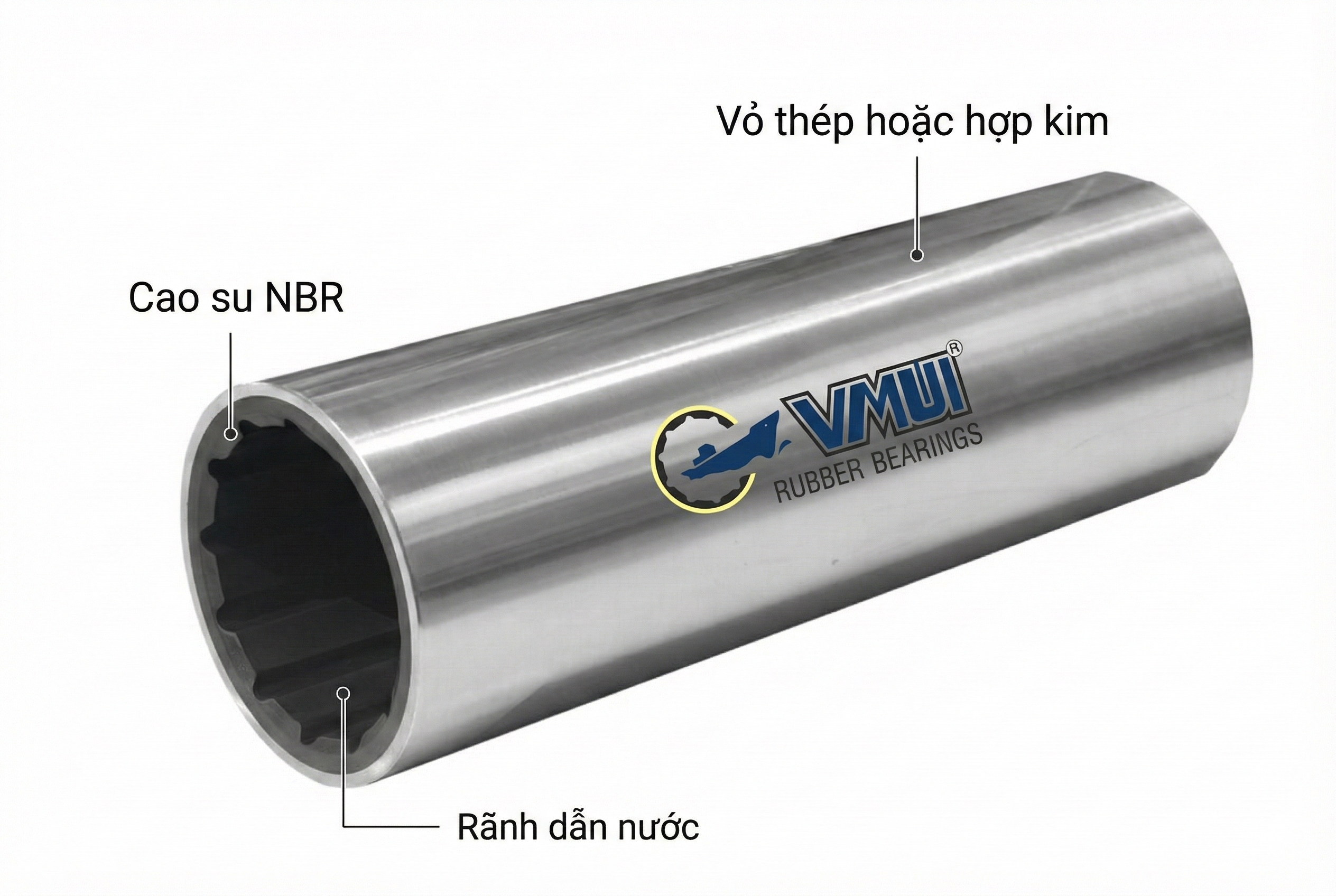
Rubber Bearings WITH Metal Shell
Structure
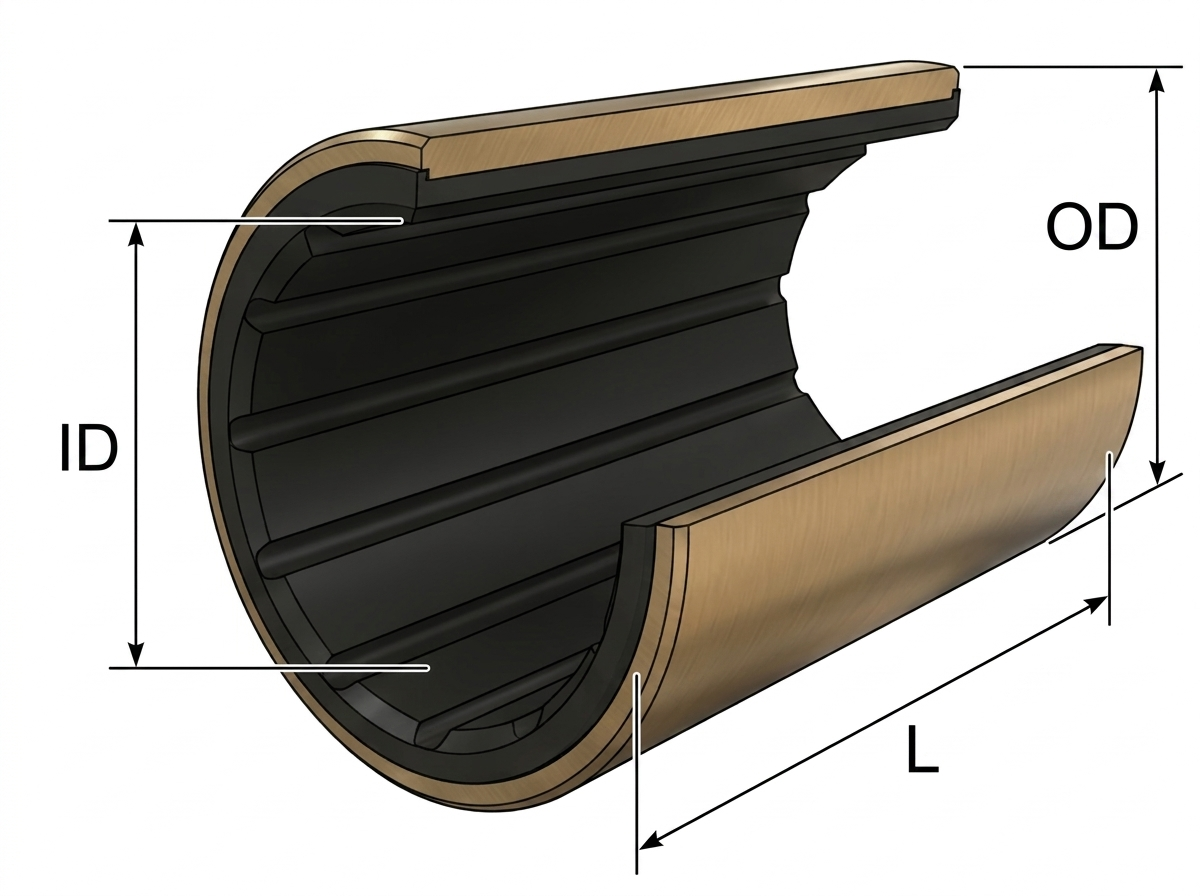
- Steel or alloy outer shell with high mechanical strength.
- Inner bore made of NBR rubber with longitudinal water-lubrication grooves.
- Rubber surface makes direct contact with the shaft to absorb vibration.
Characteristics
- Excellent mechanical strength due to metal shell.
- No deformation when pressed into the stern tube.
- Very effective vibration damping.
- Suitable for environments with high debris levels and strong vibration.
Advantages
- Withstands hydraulic pressing; ideal for manual or workshop installation.
- Stable performance even with minor shaft misalignment or strong vibration.
- Long service life in seawater with sand or gravel.
Technical Applications
- Shaft systems with large clearances requiring high vibration compensation.
- Stern tubes using press-fit or threaded installation, requiring a rigid shell.
- Environments with large debris such as rocks, sand, mud (metal shell protects the bearing).
- Systems with high torsional vibration, requiring elastic materials to absorb shock.
- Situations requiring quick replacement and easy workshop installation.
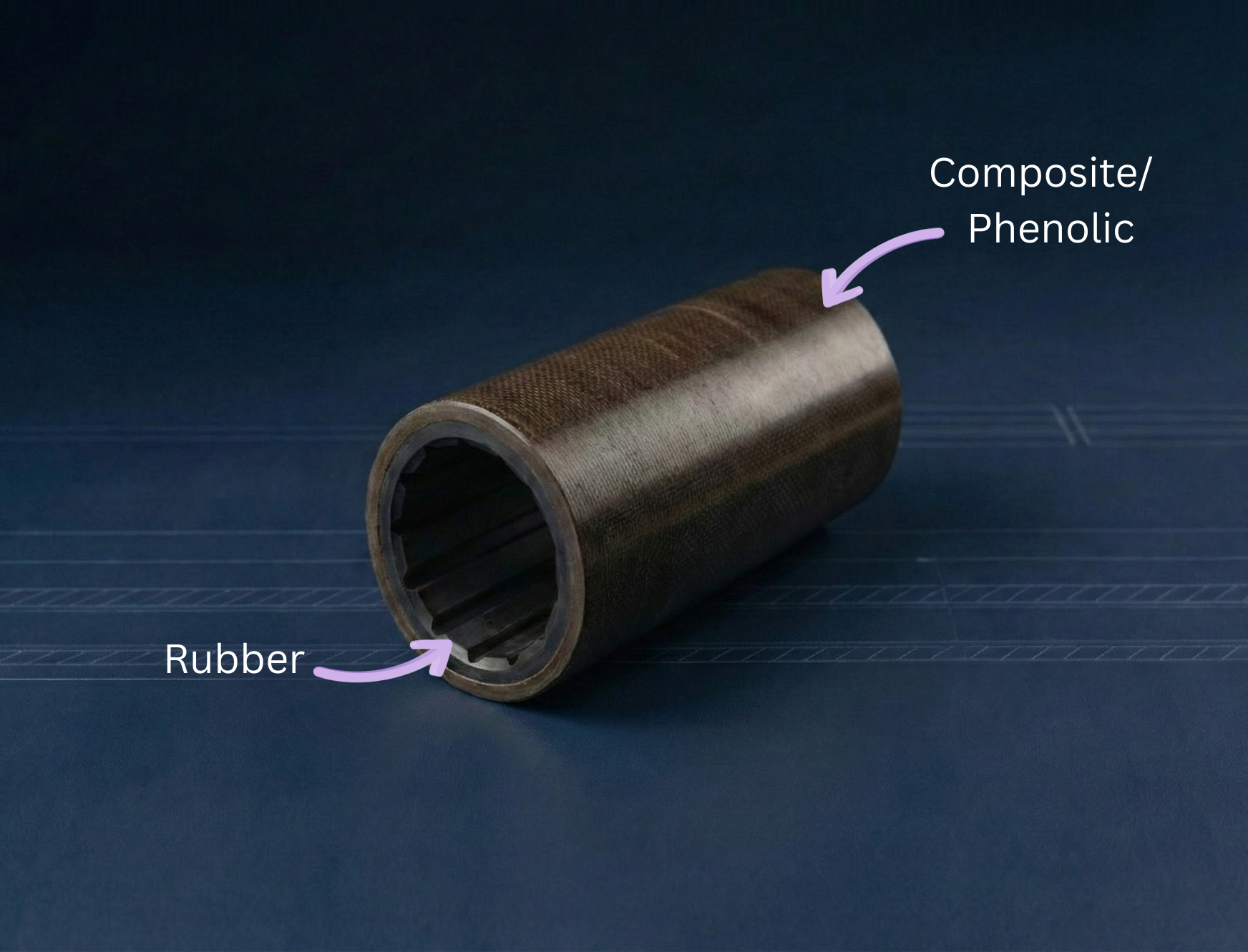
RUBBER BEARINGS WITH NON-METALLIC SHELL (COMPOSITE / PHENOLIC)
Structure
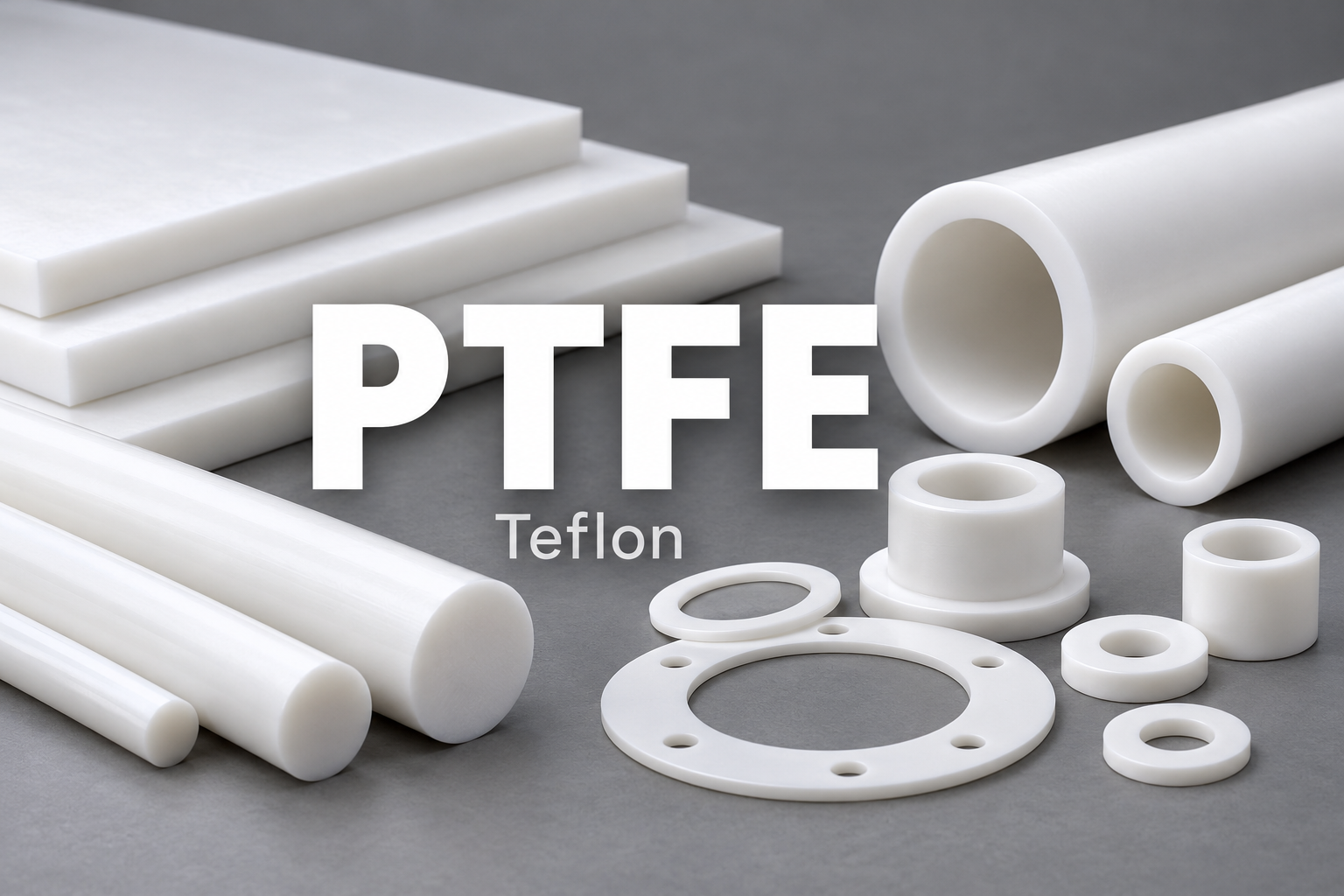
- Shell made from composite, phenolic, or technical polymer materials.
- Inner bore made of solid rubber or engineered anti-wear compounds.
- Lightweight design with high rigidity.
Characteristics
- Excellent dimensional stability.
- Corrosion-free, unlike metal shells in seawater.
- Low friction → smoother operation and reduced energy consumption.
- Minimal deformation during prolonged use.
Advantages
- Longer service life compared to metal-shell bearings in clean-water environments.
- Significant noise reduction due to lightweight and hydrodynamic optimization.
- Ideal for shaft systems requiring high precision.
Technical Applications
- Shaft systems with high concentricity requiring stable alignment.
- Systems using clean water lubrication, emphasizing hydrodynamic performance.
- Applications requiring lightweight components to reduce stern tube load.
- Continuous long-hour operation requiring long lifespan.
- Stable-speed environments with low contamination.
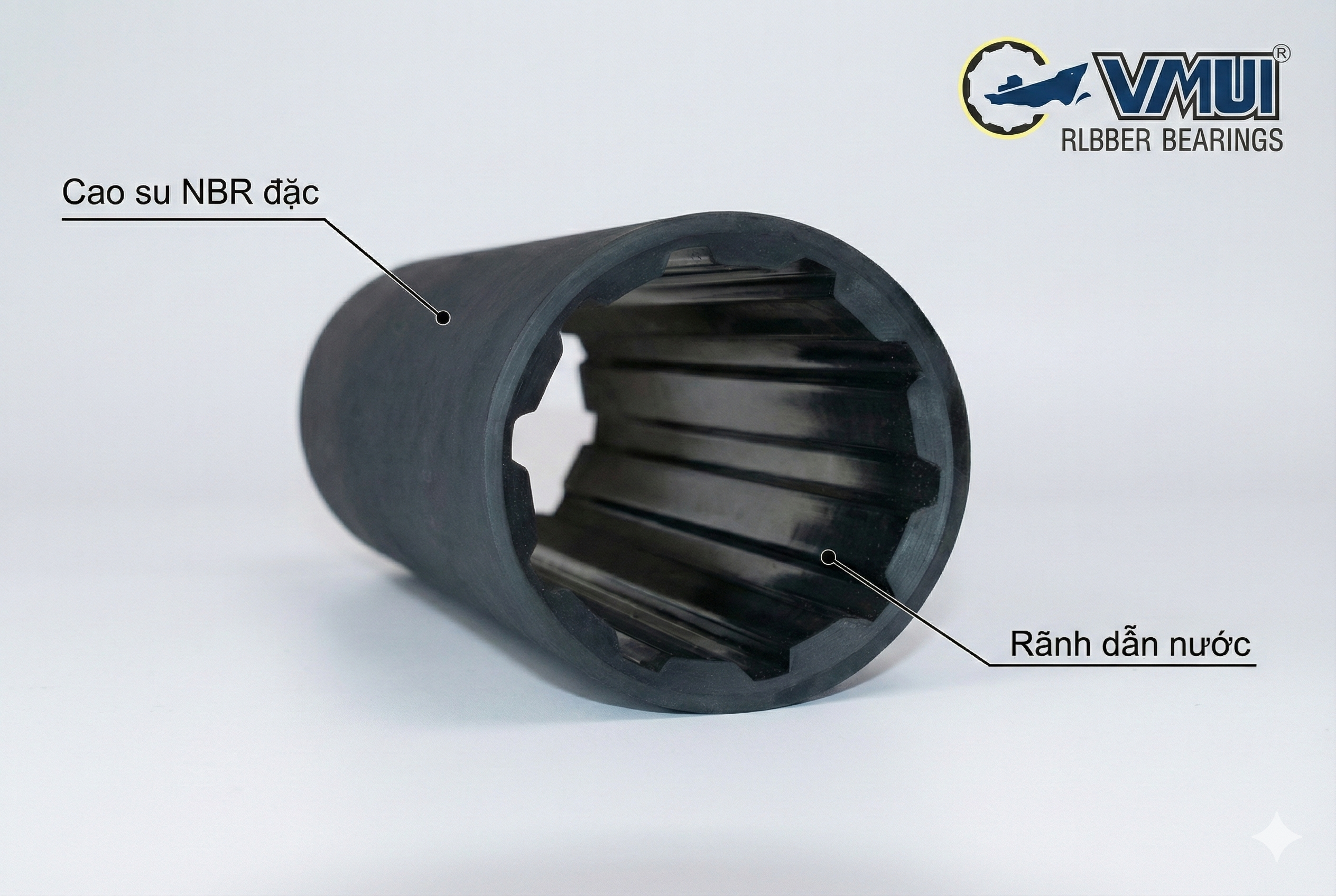
RUBBER BEARINGS WITHOUT SHELL (NON-METALLIC RUBBER BEARING)
Structure
- One-piece NBR rubber tube.
- Or rubber bonded with a plastic connector for better fixation in the stern tube.
- No metal shell / no metallic shell.
Characteristics
- Lightest among the three types.
- Flexible and capable of compensating for shaft misalignment.
- Low cost and easy to machine in any custom size.
- Suitable for small-diameter shafts.
Advantages
- Excellent vibration absorption thanks to full-rubber construction.
- Easy removal/installation → ideal for periodic replacement.
- No galvanic corrosion risk as it contains no metal.
Technical Applications
- Small-diameter shafts with low loading.
- Stern tubes made of plastic, stainless steel, or thin composite, where metal-shell bearings cannot be pressed.
- Structures requiring high deformation ability to compensate for misalignment.
- Designs prioritizing lightweight components.
- High-speed, low-load shaft systems where damping is critical.
QUICK COMPARISON OF THE THREE BEARING GROUPS
|
Criteria
|
Metal-shell Rubber Bearing
|
Composite / Phenolic Bearing
|
Rubber Bearing Without Shell
|
|
Mechanical strength
|
Very high
|
High
|
Medium
|
|
Wear resistance
|
Good
|
Very good
|
Medium
|
|
Dimensional stability
|
High
|
Very high
|
Medium
|
|
Vibration absorption
|
Very good
|
Good
|
Very good
|
|
Installation requirement
|
Press-fit, strong fixation
|
Precision fit
|
Easy installation
|
|
Cost
|
Medium
|
High
|
Low
|
|
Manufacturing flexibility
|
Medium
|
Medium
|
Very high
|
|
|
|
|
CLASSIFICATION BY MATERIAL
NBR (Nitrile Butadiene Rubber)
- Good wear resistance
- High elasticity → excellent vibration reduction
- Commonly used for medium-load, high-vibration shaft systems
Composite / Phenolic
- Rigid, low deformation
- Smooth operation, low friction
- Suitable for medium to high speeds
Rubber–Plastic Connector
- Lightweight and flexible
- Ideal for small, high-speed shafts
Classifying propeller shaft bearings based on structure, material, and technical characteristics allows users to select the right bearing for each shaft system. Each bearing type offers distinct advantages in durability, smoothness, vibration reduction, and operating cost.
Understanding the differences between metal-shell bearings, composite/phenolic bearings, and rubber bearings without shell helps optimize propeller performance and extend the service life of the entire propulsion system.