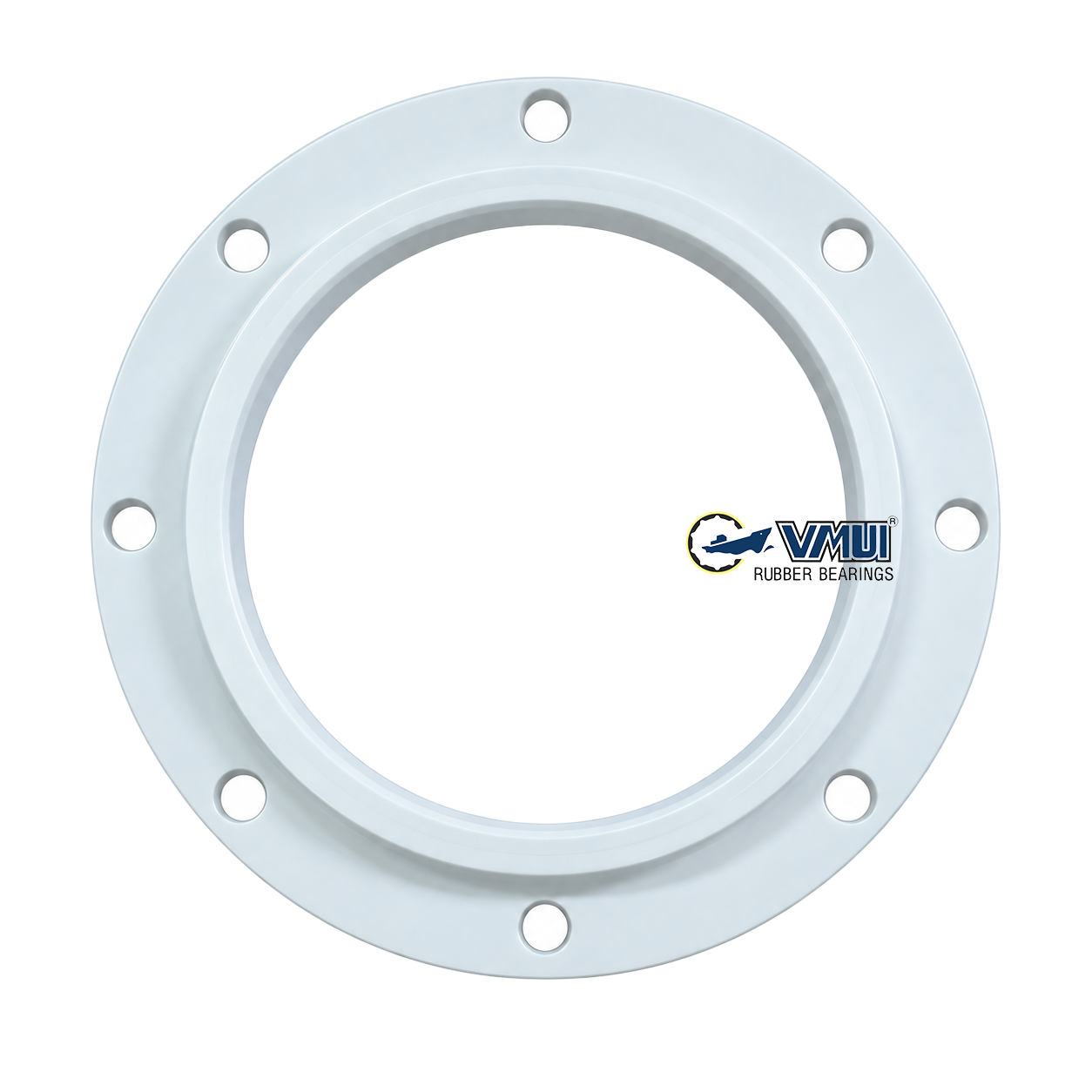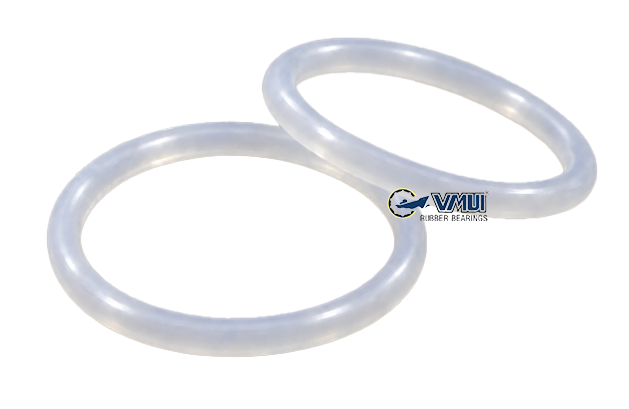
A white silicone rubber gasket is a ring-shaped sealing component molded as a single piece from silicone rubber. It is installed in a groove or between two mating surfaces to prevent the leakage of water, air, moisture, and other compatible media.
The gasket has a translucent white appearance, a smooth surface, and a profile shaped to fit its mounting position. When compressed, the silicone rubber deforms elastically and fills the gap between the mating surfaces, creating and maintaining an effective seal.
The gasket has a closed-ring structure and is molded as a seamless, one-piece component. This design eliminates joint areas, improves dimensional uniformity, and enhances sealing performance.
Depending on the equipment and installation requirements, the gasket can be manufactured with:
The product shown is a molded silicone gasket ring with a custom profile, suitable for installation in a circular groove or a corresponding mating surface.
Silicone rubber is widely used for manufacturing seals and gaskets because of its useful material properties:
Depending on its formulation, technical silicone rubber can operate across a wide temperature range. Specialized grades are also available for high-temperature, food-contact, medical, and electrical insulation applications. The material must be selected according to the actual operating conditions.
White silicone rubber gaskets perform several important functions:
Silicone gaskets can be used to seal lids, doors, and mating surfaces in equipment exposed to changing temperatures, including:
Silicone maintains its elasticity at both high and low temperatures, making it suitable for applications where conventional rubber may harden, deform, or age prematurely.
In industrial machinery, white silicone gaskets are used on flanges, machine covers, sealing grooves, and circular mating surfaces. They help prevent leakage, block dust, and protect internal components.
Typical applications include:
Silicone gaskets are commonly used in food-processing machines, beverage equipment, container lids, storage vessels, and systems that require frequent cleaning.
For direct food-contact applications, the gasket must be manufactured from an appropriate silicone compound that complies with the relevant food-safety requirements. A white or translucent appearance alone does not confirm that a gasket is food-grade.
Specialized silicone materials can be used to manufacture gaskets and seals for medical, pharmaceutical, and laboratory equipment. These applications require suitable material documentation, cleanliness levels, and certifications. General-purpose technical silicone should not automatically be considered medical-grade.
Because of its electrical insulation, moisture resistance, and heat resistance, silicone rubber can be used to seal:
To achieve reliable sealing performance, the following factors should be correctly determined:
Silicone offers good heat and weather resistance, but not every silicone compound is suitable for oils, fuels, aggressive chemicals, or high-pressure applications. The material should therefore be selected according to the actual operating environment.
White silicone rubber gaskets can be manufactured according to physical samples, technical drawings, or specified requirements:
Correctly selecting the groove dimensions, gasket profile, and rubber hardness helps generate sufficient compression, maintain sealing performance, and minimize deformation during use.